Dan Kornberg

I design how products speak.

…and build the AI systems that keep them speaking clearly. 7+ years at Wix across UX writing, system design, and AI strategy, turning real team pain into internal tools, agentic workflows, and language systems that scale a voice without losing it.

Say hello LinkedIn

Wix · UX writing lead → AI strategist

Writers Guild glossary system

A live terminology app with thousands of terms in 20+ languages, checked by writers, employees, and every AI agent before copy ships.

  • n8n
  • MCP
  • Localization
How it worksClose

Writers Guild glossary system

  • Employees view, edit, and approve terms based on their role. Writers Guild members own creation, approval, and localization.
  • Connected to every agentic system (Codex, Claude Code, Cursor, and internal AI tools) through smart query tools and a dedicated MCP server, so only approved copy reaches production.
  • The smart query expands copy into uni-, bi-, and tri-grams plus singular and plural forms before checking it against the glossary.
  • Shaped around product, design, content, and localization teams, so it became part of how products get built rather than an extra step.
Full page

Wix · AI strategist

Semantic layer & context engineering

A versioned semantic layer joining product metadata, code, copy, and data tables, so agents across teams speak the same language.

  • Semantic layer
  • Context engineering
  • Python
  • MCP
How it worksClose

Semantic layer & context engineering

  • Joins product metadata, code repos, product copy, and data tables for structured retrieval: the data catalog, developer tools, GitHub, the CMS, and the UX writing glossary.
  • The bedrock of the context engineering effort: it automates handoffs and keeps agents across teams speaking the same language.
  • Maps user-facing terms across data tables, internal systems, repos, CMS, and TMS, so a content change can be traced to everywhere it appears.
  • Four published views and five staged pipelines, regenerated and validated rather than edited by hand.
Full page

Wix · UX writing team lead → AI strategist

UX writing agents, workflows and skills

Agents, workflows, and skills that let anyone at Wix write product copy with years of guidelines built in. At every stage of AI, this work got there first.

  • Skills
  • Multi-agent
  • System prompts
  • MCP
  • RAG
How it got aheadClose

UX writing agents, workflows and skills

  • Before anyone believed agents could handle real content, I started cross-team projects to put our guidelines in order. Know-how that lived in people's heads or in scattered docs became one standard set.
  • Made the guidelines LLM-friendly: out of Notion and into clean Markdown, no emojis, back when models still struggled to read what we had.
  • While most people were still tweaking prompts, I was writing system prompts and step-by-step reasoning, then building multi-agent systems where agents work together on copy.
  • When others caught up to system prompts, I was building UX writing harnesses: reusable skills, and MCP servers that keep agents connected to live systems.
  • Connected it to how design, engineering, and product already work. The skills became part of the standard product creation kit for every PM, designer, and writer, used by dozens of people.
  • When IDEs rolled out to non-developers, the writing tools were already there. Writers led the change instead of catching up.
  • Anyone could write good first drafts now, but not everything came out good enough. That gap is why I started building checkers like the content quality agent.
Full page

Headline talk · NYC · Nov 2025 + Wix workshops

Talks & workshops

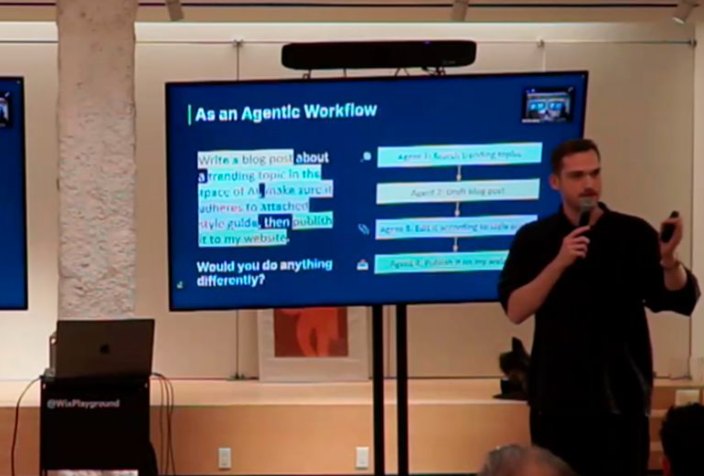
Headlined AI Agents in Practice NYC for 70+ founders, engineers, and product people: why one agent isn't enough, and how to design the system around it.

  • Agentic workflows
  • Multi-agent
  • n8n
  • Public speaking
What I talked aboutClose

Talks & workshops

  • Context ≠ attention: a bigger context window doesn't mean the model notices the one rule in the middle. Workflows give each agent one goal.
  • Specialization: researcher, drafter, editor, each with the best model for its job and only the context it needs.
  • Separation of concerns: an agent that strips PII before data leaves, structured output as a guardrail, and evals on every step.
  • A live build in n8n: research, draft, and edit agents publishing a blog post on a schedule, the same idea behind my UX writing agents.
  • Inside Wix: workshops on how agents work, multi-agent systems, the tools I built, and reusable IDE workflows for non-developers.
Full page

Wix · AI strategist

Automated content quality agent

A background agent that reviews frontend copy for voice, tone, and glossary use. It's a non-blocking reviewer, not a gate that stops pull requests.

  • Background agents
  • MCP
  • Evaluation
How it worksClose

Automated content quality agent

  • A background coding agent reads frontend code without a build environment, guided by UX writing rules over MCP.
  • Output is rewrite suggestions, quality scores, and aggregated logs. No automatic fixes.
  • Checks are ranked by difficulty: grammar, glossary, component phrasing, page hierarchy, product messaging. The two hardest keep a human in the loop.
  • Results flow to dashboards and Slack alerts, and into the CMS, n8n, and Smartling for localization.
  • The framing: from "asking AI to write copy" to "engineering a system that guarantees correct copy."

Wix · UX generalist & prompt engineer

AI assistant platform & UX writing co-pilot

Product, UX, and information architecture for Wix's internal platform for building AI assistants, plus a UX writing co-pilot.

  • AI assistants
  • System prompts
  • Information architecture
How it worksClose

AI assistant platform & UX writing co-pilot

  • Improved the UX, information architecture, and product of a technical assistant-creation tool.
  • Wrote assistant system prompts.
  • Guided PMs and UX writers building their own assistants.
  • Created the UX writing co-pilot.

Wix · UX writing team lead

UX content library

A structured UX content library used by 70+ writers.

  • Content systems
  • Content ops
  • Team leadership
How it worksClose

UX content library

  • A structured library of UX content, used by 70+ writers.
  • Part of the operating model set up as team lead: processes for content strategy, testing, glossary governance, and cross-team collaboration.
  • Run alongside leading UX writing for Wix Studio and Wix Partners, with PMs, designers, developers, and localization partners.

Wix · UX writing team lead

UXW app

Upload a screenshot with its business and UX context, and a model returns specific copy and UX suggestions grounded in that screen.

  • Node
  • OpenAI
  • Prompt design
How it worksClose

UXW app

  • Node and Express, with screenshot upload and an OpenAI model.
  • The prompt is built from the UX story, business context, focus area, and predicted user sentiment.
  • Suggestions are tied to the actual screen, not open-ended brainstorming.
The best interface copy is the sentence you never had to think about.
Working thesis

The résumé

  1. 2025–2026

    AI strategist · Wix

    Designed and shipped internal AI tools for product, UX, and content teams, with high-quality agentic output under human control. End-to-end systems: context engineering, RAG, orchestration, structured knowledge bases.

  2. 2021–2025

    UX writing team lead · Wix

    Led UX writing for Wix Studio and Wix Partners. Built a content library used by 70+ writers; established content strategy, testing, and glossary governance across disciplines.

  3. 2021

    Senior UX writer · Wix

    UX writing, localization, and cross-functional work across CRM, identity, and security.

  4. 2019–2021

    UX writer · Wix

    Copy for 10+ CRM and business products, ideation through launch. Led usability testing to sharpen product communication.

The story

I spent nearly eight years at Wix, mostly in UX writing, but I was always drawn past the edges of the role. The work I loved most was the broader product problem: how an experience should work, what users actually need, and how product, design, technology, and language come together to solve it.

Generative AI gave that instinct a new direction. I taught myself the technical side and started prototyping with LLMs, APIs, automation tools, and coding agents. That led me into AI strategy at Wix, and showed me where I'm strongest: moving between user needs, product thinking, and emerging technology to turn ideas into something tangible.

Now I want roles where that combination is the job. UX is my foundation, but I learn fast, think strategically, prototype quickly, and turn new technology into useful product experiences. I want to help shape what AI products become, not just one narrow part of them.

Building something where language and AI meet?

I'm interested in AI strategy, content systems, and the tools that keep a product's voice coherent at scale.